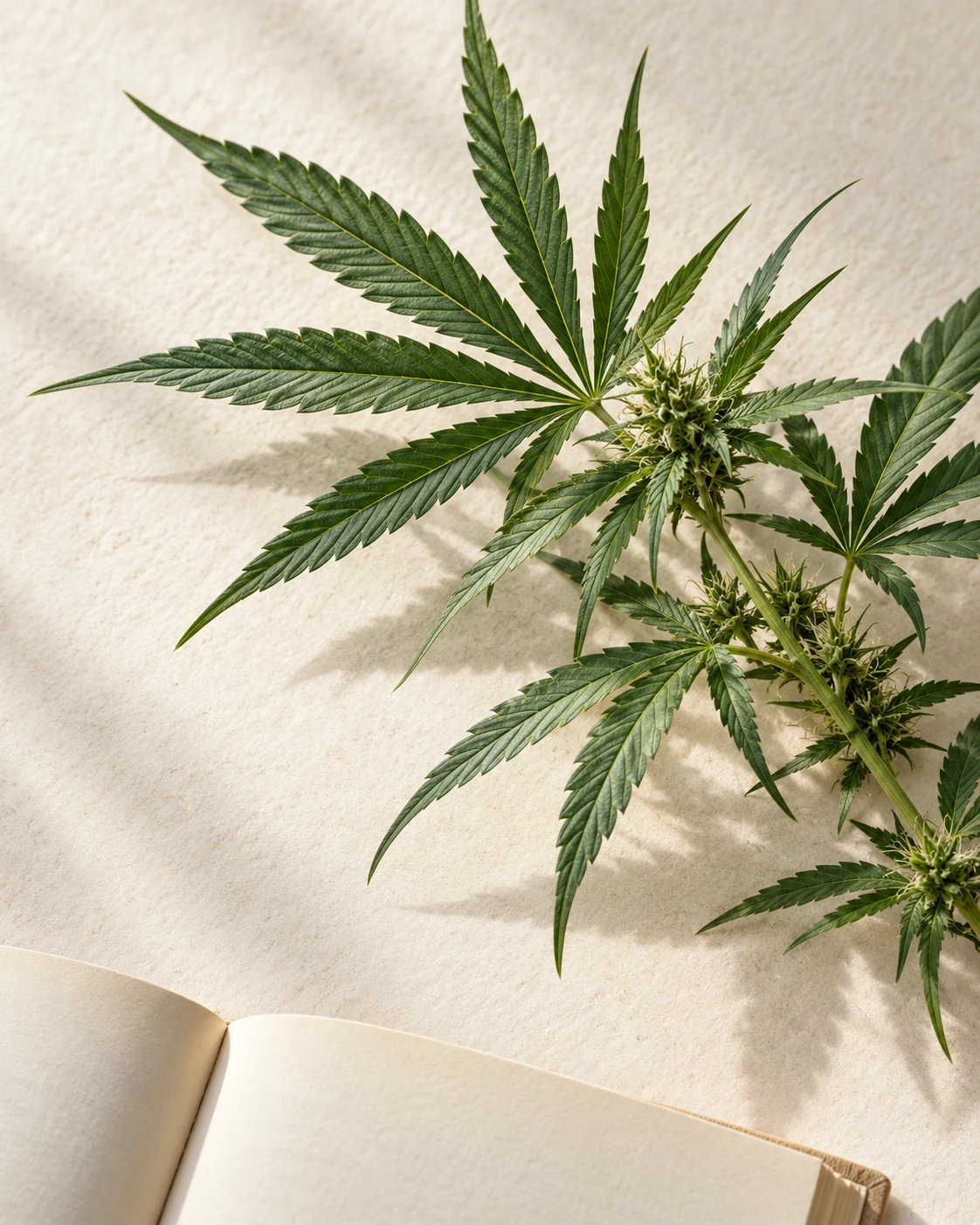
Permission to grow hemp does not establish that every product made from it can be sold in every form.
What Do We Mean by Hemp?
Hemp is cannabis material discussed within an agricultural and legal framework. It is not a separate ingredient called CBD, and it is not a promise about the contents of every product bearing a hemp leaf. The crop can supply different materials for different purposes. Understanding those purposes is the best place to begin.
USDA's Domestic Hemp Production Program oversees cultivation through a federal framework and approved state or tribal plans. A producer's authorization depends on the relevant program and location.[1] That is an agricultural question. It differs from the rules for a finished food, cosmetic, cannabinoid formula, or medicine.
You may see hemp used to describe fiber, seed ingredients, floral material, an extract, or the origin of a retail product. Each conversation concerns a different stage or input. A statement about one should not silently become a conclusion about all the others.
This article uses an October 2026 context. Hemp provisions and finished-product requirements are changing, so use the site's dated legal guide for current implementation details and official sources. The botanical distinctions remain useful even when a rule changes: the plant, its parts, an extract, and a finished formulation still need their own descriptions.
Is Hemp a Different Plant From Cannabis?
Hemp belongs to the cannabis plant context. Legal and agricultural classifications distinguish material and uses; they do not turn cannabidiol into a plant species. NIH's cannabis overview and FDA's seed-ingredient information describe the connection between Cannabis sativa and hemp-related materials.[3][6] Keep that context separate from a product's measured cannabinoid content.
Plant varieties can differ in traits. USDA's Agricultural Research Service maintains a hemp collection and characterizes features including plant architecture, flowering behavior, secondary metabolites, seed traits, and fiber quality.[7] Those categories show why one crop name can encompass material useful for different agricultural goals.
Think of the difference between a broad crop name and a particular planting's intended output. A farmer pursuing fiber has a different product question from one pursuing grain or cannabinoid-containing floral material. A shared plant context does not make the harvested inputs equivalent.
For the reader at a store shelf, the useful question is which part and processing stage appears in the ingredient statement. Hemp seed oil identifies an oil from seeds. Hemp extract needs a fuller description of what was extracted and what compounds remain. CBD identifies one compound. Those terms are related without being synonyms, and the distinction matters more than the plant illustration.
Why Do Farmers Grow Different Kinds of Hemp?
Hemp production serves several end uses. USDA's National Hemp Report separates floral, grain, fiber, and seed production, including production grown in the open and under protection.[2] The categories are useful evidence that the industry includes more than cannabinoid oils.
Grain generally concerns harvested seed material for uses such as food or processing. Seed production can concern planting material. Fiber concerns material valued for structural uses. Floral production concerns harvested flower material and related outputs. When reading an agricultural report, use its definitions rather than assuming every mention of seed means the same market.
Those end uses create different questions about crop performance. An ingredient buyer may care about fatty-acid composition for seed oil, fiber qualities for an industrial use, or a cannabinoid profile for an extract. A plant's overall yield is not necessarily the same measurement as its yield of a particular compound.
Imagine a hypothetical farm growing hemp for grain. A photograph of that field would accurately show hemp cultivation. It would not establish that a CBD bottle originated there or tell you the bottle's concentration. Match the farm claim to the crop's output and the later supplier records. End-use information makes a plant-origin story easier to investigate.
What Happens to Hemp Seeds?
Hemp seeds can be processed into distinct ingredients, including hulled seed, protein powder, and seed oil. FDA reviewed specific GRAS notices for those three seed-derived food ingredients and explained their intended-use context.[3] The fact that all begin with seeds does not mean they have the same composition or role in a recipe.
The oil fraction and a protein-containing ingredient answer different nutrition and formulation questions. Pressing oil from seeds is also a different process from obtaining a cannabinoid-rich extract from other plant material. Do not let the broad phrase hemp product hide which material is actually being discussed.
FDA notes that the seed-derived ingredients covered by its notices contain only trace CBD and THC from contact with other plant parts during harvesting and processing.[3] That is important nuance: ordinary seed-ingredient context is different from an explicit amount of added cannabidiol, while a universal promise of absolute absence would be too broad.
A hypothetical salad oil labeled hemp seed oil should therefore be read as a seed-derived oil. If another product lists hemp seed oil plus a CBD-containing ingredient, identify the two separately. The carrier oil and the cannabinoid ingredient can share a bottle without sharing a role. Visit the hemp-oil terminology guide for the label distinction.
What Happens to Fiber and Floral Material?
Fiber and floral material travel into different processing chains. USDA discusses hemp's applications in fiber, grain, and phytochemical contexts, while its production report records these end uses separately.[8][2] A material useful for textiles or another structural application is not automatically a cannabinoid ingredient.
Floral material can enter an extraction chain in which the manufacturer separates a selected mixture from starting plant material. Subsequent processing and formulation can change the composition again. A field's plant material, a concentrated extract, and a diluted finished bottle are not three descriptions of an identical sample.
An entirely hypothetical processor might purchase floral material, produce an extract, and supply it to a company that blends an oil formula. You would need records linking those stages to substantiate the finished item's origin. A fiber producer's cultivation record would answer a different supply-chain question.
This is why a hemp story should name the input as well as the farm. A photograph and a broad origin claim offer context, but they leave processing and formulation unresolved. The manufacturing guide follows the educational stages without giving extraction recipes. For a product reader, the goal is traceability and clear composition, not learning to operate manufacturing equipment.
How Is a Growing Crop Tested?
USDA crop-testing guidance describes samples representing a lot of hemp and measurements intended to assess compliance under the production program. The testing uses a dry-weight basis and considers the potential conversion of THCA, an acidic precursor, into THC.[4] Those details explain why the phrase hemp tested needs context.
A crop-compliance sample answers a question about designated agricultural material. It does not necessarily measure CBD in a finished oil or determine the amounts in a gummy. Later extraction, separation, blending, and additions can change the material being discussed. Sample identity belongs beside every result.
Dry weight is also a measurement basis, not a household instruction. Removing moisture from the denominator changes how a percentage is expressed. A dry-plant percentage cannot automatically be read as a finished-product concentration, and an agricultural threshold cannot simply be carried over to every product category or jurisdiction.
Imagine a hypothetical package linking only to its source crop's test. The document could help explain that crop's record while leaving the finished batch's cannabinoids unanswered. Ask for the sample description and lot connection. The COA guide helps readers distinguish crop testing, ingredient testing, and finished-product testing without collapsing them into a single approval claim.
Why Do Thresholds Need a Date and a Measurement Basis?
A number can look universal when the surrounding definitions are omitted. USDA's published production-testing guidance discusses an acceptable hemp THC level of 0.3 percent and a method that considers total available THC from THC and THCA.[4] Read that within the agricultural compliance framework the guidance describes.
The important question is not just which percentage appears. Ask what material was sampled, which cannabinoids were counted, what basis was used, which rule governs the activity, and when the rule applies. Finished-product requirements may use different definitions or measurements, and federal and state requirements can differ.
This page does not turn that agricultural number into a promise that any product below a printed percentage may be sold, possessed, or transported everywhere. It also does not imply that a low percentage guarantees no intoxicating exposure or a negative test. Product amount, formulation, and policy are separate questions.
In an October 2026 reading, the timing of changing federal hemp provisions deserves particular attention. The dated legal framework supplies the detailed implementation discussion. For a specific crop, consult the applicable production authority; for a finished product, identify the authority and rule relevant to that product and activity. The number belongs to its context, not to a universal slogan.
Does a Cultivation License Cover Every Later Product?
A cultivation authorization covers the agricultural activity described by its program. USDA's hemp-law materials distinguish its production role from FDA and local-government regulation of products manufactured for human or animal consumption.[5] That division helps explain why a grower's permission is only one part of a larger product story.
An extract maker, formulation company, retailer, and advertising claim can each raise questions beyond the source field. Identifying a licensed grower does not establish the later formula, all required testing, or the rule for a particular retail form. A meaningful compliance statement needs to name the activity it covers.
For an illustrative example, imagine an oil maker displaying a supplier farm's license next to a claim about treating disease. The license may be relevant to cultivation. The treatment claim raises a different question about the finished product and its intended use. One document cannot answer both merely because the product contains plant-derived material.
Similarly, a seed-ingredient food notice should stay attached to that ingredient and its intended uses. It is not approval of added CBD or every product containing the seed oil. Read the ingredient guide for this distinction, and follow official regulatory sources for the activity you are actually investigating.
How Can You Follow a Farm-Origin Claim?
Work backward from the finished product. Identify its manufacturer, complete ingredient statement, batch number, and matching laboratory report. Then ask which ingredient supplier and source records connect that batch to the named farm. The connection between stages is more informative than a general picture of where hemp can grow.
The identifiers may change as material is processed. A farm lot, an extraction batch, a blending batch, and a packaged lot can each have their own records. A useful chain explains how one maps to the next. Without that connection, several individually real documents may still not describe the item in front of you.
Imagine a hypothetical product stating grown in Kentucky and packaged elsewhere. That is not inherently contradictory: cultivation and formulation are different activities. The practical question is whether records support the claim and identify what happened between them. Do not assume that one location describes every stage.
Traceability also has limits. Knowing a source can help inspect provenance without establishing a medical benefit. A favorable clinical paper does not verify provenance either. Keep origin, batch composition, and the claim being evaluated as separate parts of your notes. Our plant-to-product overview explains how to read those connections.
Does Organic or Natural Hemp Settle Product Quality?
Words about agricultural practices and words about a finished formula concern different properties. A natural-origin statement tells you little by itself about cannabinoid quantities, contaminants, or effectiveness. Any specific certification should be read for what it covers and whether it applies to the relevant ingredient, process, or finished item.
A useful way to investigate is to ask what the claim actually certifies. Does it concern a crop practice, an ingredient's identity, a manufacturing system, or measurements from a batch? Who issued it, and can its scope be checked? A familiar badge does not replace the underlying description.
For a hypothetical extract, a claim about how the plant was grown would still leave questions about later processing and other ingredients. A potency panel would leave different questions about test scope. These are complementary pieces of information when their identities match, not interchangeable proofs of quality.
Likewise, calling a crop sustainable needs a defined comparison and boundary. Water use, energy, processing, land use, and the final application can be different questions. This article does not rank crops or products from a single adjective. Treat each claim as something specific to examine, and avoid turning an appealing plant story into evidence about a medical outcome.
How Does Hemp Background Help With CBD Research?
It helps identify what the study actually used. Hemp seed oil, a CBD-containing extract, purified cannabidiol, and a THC-and-CBD formulation are different interventions. Sharing a plant context does not allow the findings from one to be assigned automatically to another.
An illustrative trial might investigate a purified CBD solution. Its results concern that intervention and its study question. They do not establish the effectiveness of a plain seed oil, a fiber-derived material, or every bottle called hemp extract. A broad cannabis headline often needs a narrower description before its conclusion becomes usable.
The reverse distinction matters too. Nutritional information about seed ingredients does not establish a CBD treatment claim. An agricultural production statistic describes the crop economy, not clinical effectiveness. A laboratory potency result describes sample composition, not whether a symptom improves. Each kind of source has a useful role when you ask the right question.
Start your research notes with the actual ingredient and formulation, then add participants, comparator, outcome, and duration. Only after that should you record the result. The research hub walks through the process. Hemp background improves your vocabulary so you can recognize an intervention mismatch before it turns into an unsupported product conclusion.
Questions Readers Often Ask
Does hemp always contain a useful amount of CBD? A hemp-origin statement does not specify the cannabidiol amount in a finished product. Plant part, crop purpose, processing, and formulation matter. Look for an explicit cannabinoid quantity and an appropriate sample result rather than inferring strength from the crop name.
Are hemp seeds and hemp extract the same ingredient? No. Seeds and seed-derived ingredients belong to a different input and processing context from a cannabinoid extract. A label should identify the actual ingredient. If it lists both a seed oil and a cannabinoid ingredient, read their roles separately.
Can an old legal article still be useful? It can explain history if its date and framework are clear. It should not be used as the sole answer for a current activity when definitions and requirements have changed. Follow dated coverage and official updates for the relevant jurisdiction.
What is the most useful fact to remember? Hemp can begin several different product chains. Identify the part, process, sample, and finished formula before evaluating an amount or claim. That habit lets you appreciate the crop's many uses while keeping the science, documentation, and legal questions attached to the correct stage.
Sources & Further Reading
- USDA: Hemp Production Program ↗
- USDA NASS: National Hemp Report (April 2026) ↗
- FDA: Hemp Seed-Derived Food Ingredients ↗
- USDA: Laboratory Testing Guidelines for Hemp ↗
- USDA: Hemp Laws and Regulations ↗
- NIH NCCIH: Cannabis and Cannabinoids ↗
- USDA ARS: Hemp Collection and Plant Characterization ↗
- USDA ARS: Exploring the Myriad Possibilities of Hemp ↗
Sources checked October 5–6, 2026. This page is for general education. No medical review or endorsement is implied. Read the editorial policy.