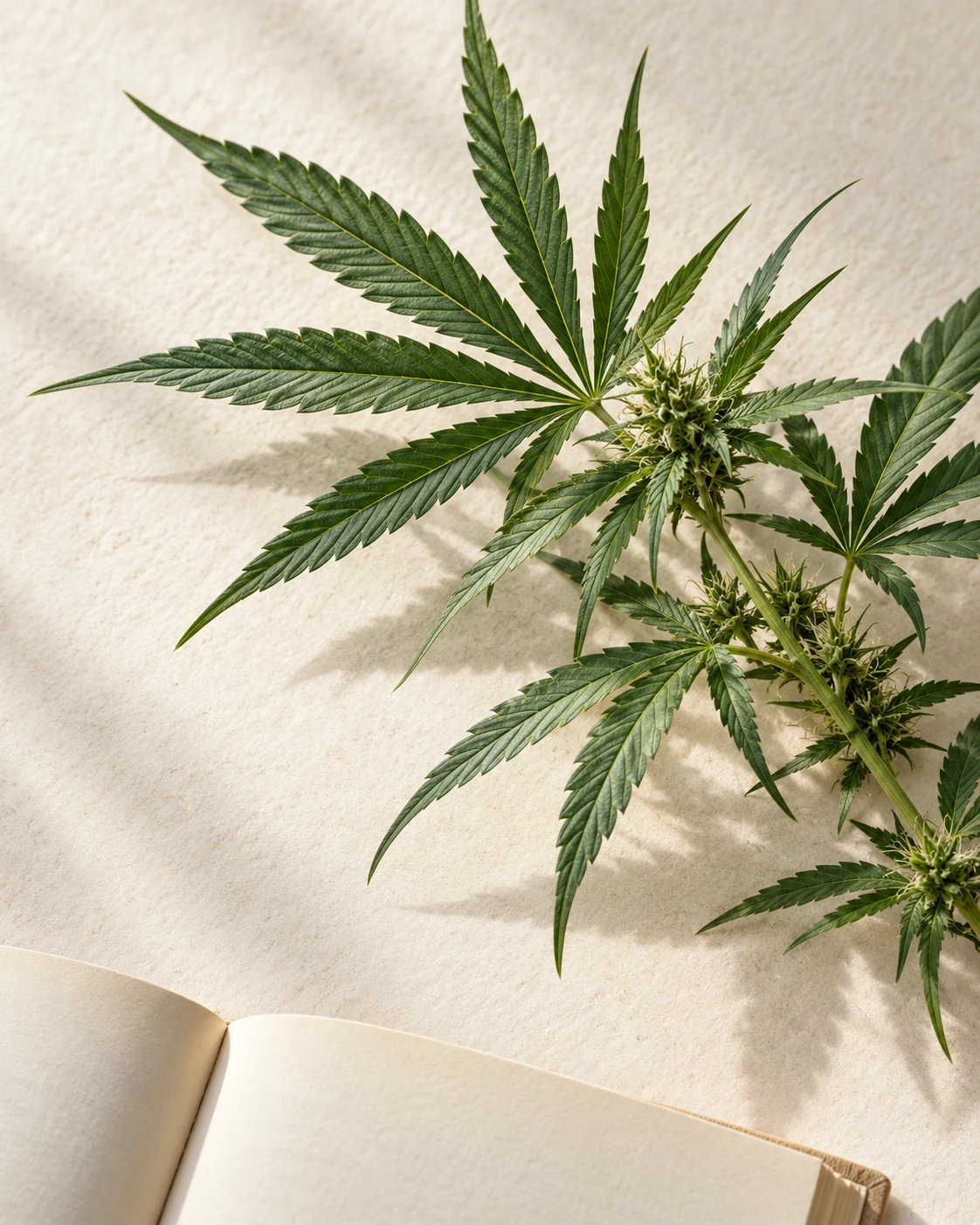
A useful CBD answer keeps the ingredient, evidence, goal, and setting visible.
What Would You Like to Understand About CBD?
You may have arrived with a simple question: what is CBD? Or you may be trying to make sense of a sleep claim, a bottle label, a friend's experience, or an unfamiliar word on a laboratory report. Each is a useful place to begin. You do not need a science background to ask a careful question or recognize when an explanation skips an important detail.
This library brings those questions together. The basics explain the plant and its compounds. Health-topic guides examine particular research questions. Practical guides cover ingredients, timing, interactions, and testing. The state resources explain where to check current official information. Choose the question closest to yours, then follow the next link when you need more context.
A good first step is to write your question in one sentence. Compare “Does CBD work?” with “What did a CBD-only study find in adults with insomnia?” The second question identifies an ingredient, a population, and a goal. It gives you something specific to look for instead of asking one product term to explain every possible use.
Keep that sentence beside you as you read. If an article answers a different question, you can still learn from it. Just keep the difference visible. Understanding the boundary of a finding is part of understanding the finding itself.
Start With the Plant, Then the Ingredient
The word cannabis describes the plant. Cannabidiol, usually shortened to CBD, describes one of its compounds. THC is a different compound. Hemp is a term with a legal meaning that depends on the relevant definition and date. Hemp seed oil, a hemp extract, and a finished CBD oil also describe different things. Learning these distinctions makes almost every later question easier.
Imagine an illustrative label that says “hemp oil” on the front. That phrase alone does not tell you the CBD amount. Turn to the ingredient list and the quantitative information. Does the formula contain oil pressed from seeds, an extract that includes cannabinoids, or both? Is CBD actually listed in milligrams? A botanical name and a measured ingredient amount serve different purposes.
The CBD introduction explains these ideas together. The CBD and THC comparison follows the two compounds more closely. The oil comparison helps untangle common carrier and ingredient terms.
You can build your own short glossary as you go. Write the term, its meaning in that article, and the question it answers. For “concentration,” that question might be how much CBD is listed per milliliter. For “full-spectrum,” it might be which compounds are described as present. If a definition does not answer your actual question, look for the measurement or evidence that does.
Choose the Right Guide for a Health Claim
Health claims often arrive as broad statements about comfort, calm, recovery, or general wellness. Before reading the supporting research, turn the statement into a defined outcome. Is the claim about falling asleep, pain during an activity, a questionnaire score, or a disease measure? Those outcomes may matter in different ways, and a study needs to tell you which one it assessed.
The effects and uses collection organizes the research by question. Its pages describe the condition or concern, explain relevant trials, and keep the tested ingredients beside the results. A page existing in that collection means the question deserves an explanation. It does not mean that CBD is an established treatment for it.
There is a specific FDA-approved prescription CBD medicine for specified seizure conditions. That approval applies to the medicine and its approved use. It does not establish the effectiveness of every retail product or of CBD for the many other concerns covered here.[2]
If a health concern is affecting your life, reading can help you prepare for care. It cannot determine the cause of that concern or assess your complete history. Bring the question you wrote down to a qualified professional. Ask which diagnosis and outcomes matter, what options have relevant evidence, and how any proposed product would fit with the care you already receive.
Keep the Tested Product Beside the Result
Two studies can use the word CBD while testing quite different interventions. One might investigate highly purified oral CBD. Another might use a THC-and-CBD mixture. Another might apply a specific cream to the skin. Each experiment answers a question about its own preparation, participants, comparison, and follow-up. These details should travel with the conclusion.
Here is an illustrative reading exercise. A headline says “cannabis improves a symptom.” The study description reveals that the intervention contained THC and CBD. A second article shortens the result to “CBD improves the symptom.” That change removes an active ingredient from the explanation. The mixture finding remains worth discussing, but it cannot tell you CBD's individual contribution without an appropriate comparison.
Check the route too. A swallowed oil, a skin preparation, and inhaled material are different exposures. Even products taken by the same route can differ in ingredients and formulation. A retail label that resembles a study ingredient list does not automatically recreate the studied product or the controlled conditions in the experiment.
Our guides use the full description whenever it changes the interpretation. You can do the same in your notes: preparation, route, participants, comparison, duration, and outcome. If you cannot find one of those details, write “not stated” rather than guessing. That small habit helps you distinguish an answer from a gap in the information.
Understand the Comparison Before the Conclusion
People can improve during a study for several reasons. Symptoms may fluctuate, other care may help, routines may change, and expectations may influence reported outcomes. A comparison group helps researchers ask what the tested intervention added under the conditions of the experiment. Read the difference between groups, as well as any change within one group.
Imagine a hypothetical trial in which both groups report less discomfort at the end. If the article describes only the active group's improvement, you have an incomplete account. How much did the comparison group improve? Was the difference uncertain? Which outcome was planned as the main test? Those questions help you understand what the result actually contributes.
A randomized trial assigns participants by chance. That approach helps reduce systematic differences at the start, but it does not remove every limitation. A small sample, short duration, missing follow-up, or imperfect masking can still affect interpretation. Randomization is a useful design feature, not a reason to stop reading the methods.
The research hub gives you a compact framework for these checks. Read a study's main result before exploring its smaller subgroups or secondary measures. A favorable exploratory detail may suggest another research question. Keep that role clear instead of allowing it to replace the experiment's planned comparison.
Read Numbers With Their Units
Labels and laboratory reports contain numbers that answer different questions. Milligrams measure mass. Milliliters measure volume. A total container amount differs from an amount per milliliter or per listed serving. Percentages need an explanation of what is being compared. Always read the number and unit together before drawing a conclusion from a large figure on the front of a package.
For a purely illustrative oil label, suppose the container lists 900 milligrams of CBD in 30 milliliters. Dividing 900 by 30 gives a listed concentration of 30 milligrams per milliliter. A listed half-milliliter serving would then contain 15 milligrams on that label's figures. This calculation explains a label. It does not choose a personal dose or verify the actual contents.
The label guide includes an interactive arithmetic example. The laboratory-report guide explains batch matching, measurements, and test scope. Use the two together: the package states what is claimed, while a report describes what was measured in a particular sample.
If the unit changes between pages, pause before comparing. An extract concentration may differ from the concentration in the finished bottle. A report per gram cannot be read as an amount per bottle without the needed mass information. Write down exactly what each figure describes. A clear unit often resolves a confusing comparison more quickly than another marketing explanation.
Give Safety Its Own Question
A discussion of possible benefit is incomplete without a discussion of risk. Your existing medicines, other supplements, health history, and the entire product formula matter. A supplement term or plant-derived ingredient does not, by itself, establish that a product is suitable for a particular person. The FDA identifies interaction and liver concerns among the issues readers should understand.[1]
The safety guide helps organize a professional conversation. Bring the complete ingredient list and relevant batch information, together with your current medication list. If you already use a product, describe the actual amount and timing accurately. Those details support an assessment; an online guide cannot conduct that assessment for you.
Be precise about the goal. Feeling sleepy, for example, is an observation. Whether an insomnia condition has improved is a clinical research question with defined outcomes. A noticeable effect and a desirable outcome can overlap, but they are not interchangeable descriptions. Record what happened without turning the observation into a diagnosis or a conclusion about cause.
Safety also includes the situation in which a product is used. Drug-testing policies, sport rules, driving decisions, and veterinary care raise distinct questions. Follow the guide for the situation you actually face. An answer about one setting cannot provide a guarantee in another, even when the same ingredient appears in both discussions.
Check the Date and the Authority for Legal Questions
A legal question needs a place, a date, a product category, and an activity. Growing a crop, manufacturing an extract, selling a finished food, and using a cosmetic can involve different rules. A statement about one activity should identify its scope. It cannot supply a complete answer about every product associated with the plant.
The legal overview explains the layers involved. The state source collection links official authorities and explains what their records can help verify. These are research and verification guides. They are not a list of endorsed stores or a legal clearance for a specific purchase.
For an illustrative example, imagine a seller displaying a crop license beside a finished gummy. The license may answer a question about the farm. It does not, on its own, answer every question about the gummy's ingredients, product registration, label, or sale. Ask which record applies to the activity and which authority issued it.
Keep the source date in your notes. An official page can explain its own program accurately while leaving another program outside its scope. A historical article can provide useful background while describing rules that have changed. When a decision depends on current compliance, read the latest authority and obtain qualified advice about the specific facts.
Use Personal Stories as Questions to Explore
A friend's experience can explain why a topic interests you. It can also suggest outcomes worth discussing, such as a change in routine or an activity that felt easier. But a personal story usually cannot separate the effects of the product from other changes happening at the same time. Keep the observation and the explanation as distinct parts of the account.
Imagine a clearly hypothetical reader who starts a product during a week of improved sleep habits and reduced work pressure. They feel better by Friday. A helpful note records all three changes. A confident statement that the product caused the improvement would require evidence the note cannot supply. The uncertainty belongs in the description, even if the improvement feels important.
The experience-note tool helps create a local record. It downloads a note on your device; it does not send a submission to this website. Include the relevant product details, the observation, timing, other changes, and what remains uncertain. A useful account can be honest about its limits.
When you read a testimonial, ask the same questions. What was used? What else changed? What outcome was observed? How long was follow-up? Was the account selected from a larger set of experiences? These questions do not dismiss the person. They help determine what the account can explain and what needs a different kind of evidence.
Build a Reading Path That Fits Your Question
You do not need to read the library from beginning to end. Start with the closest guide, then use its links to fill the gaps that affect your understanding. A reader checking an oil label may need concentration, spectrum terms, and batch reporting. A reader evaluating a symptom claim may need the condition guide, research framework, and safety questions.
Here are three illustrative paths. For an unfamiliar ingredient, begin with CBD basics, then compare CBD with THC and read the oil terminology. For a health claim, begin with the specific condition, examine the cited experiment, then prepare questions for professional care. For a purchase-related rule, begin with the legal layers, identify the product category, and follow the official state authority.
The searchable glossary is useful when a term interrupts your reading. The knowledge quiz checks concepts such as label amounts, study scope, and testing limits. Neither tool scores your personal health choices. They are ways to notice which ideas are clear and which deserve another look.
Finish a reading session with a short note: what the guide answered, the strongest relevant source, and the most important question still open. This makes your next step concrete. You may need a definition, the full study, a current official record, or a conversation with a qualified professional. Each is a reasonable result of careful reading.
What Makes This Education Resource Independent?
Dad Dyburt is the current education resource on daddyburt.com. The domain previously carried the Daddy Burt retail name. This site is unaffiliated with that former retailer. Its role is to explain CBD-related questions and link evidence, rather than sell products or support former transactions. The new name helps make that distinction visible.
That background matters when you arrive through an old address. Retained learning URLs now contain fresh educational material. Former shop and account addresses direct visitors to the homepage. The site cannot access old purchase records, handle returns, or speak for the former business. Refer to your original transaction documents when investigating a past order.
The editorial policy describes how sources and uncertainty are handled. The content does not claim an unnamed medical reviewer, a professional endorsement, or firsthand patient experience. Illustrative situations are identified as examples. Research links let you examine the material behind an explanation.
You can use that transparency as part of your reading. Check the source list, the date, the tested formulation, and the boundary of the conclusion. If an explanation leaves you with a better, more specific question, it has done useful work. Learning about CBD involves understanding those details well enough to decide what information or professional input you need next.
Sources & Further Reading
- FDA: What to Know About Cannabis-Derived Products, Including CBD ↗
- FDA: Cannabis and CBD Questions and Answers ↗
- NIH / NCCIH: Cannabis and Cannabinoids ↗
- CDC: About CBD ↗
Sources checked October 5–6, 2026. This page is for general education. No medical review or endorsement is implied. Read the editorial policy.